Virelloxar
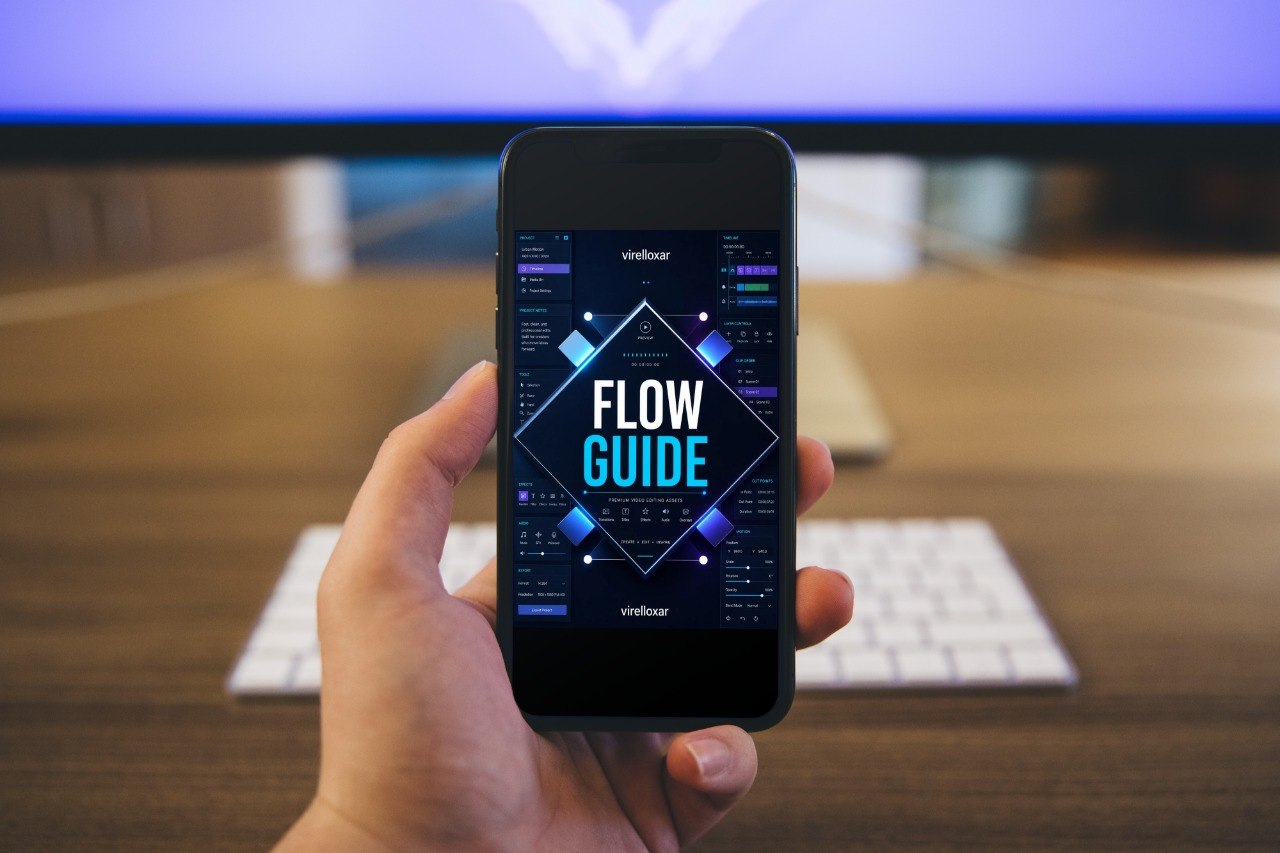
Flow Guide
Flow Guide
Couldn't load pickup availability
- 💾 Digital file available after purchase
- 🗂️ Long-term availability
- 🛡️ Secure checkout
- 🔄 Content updated in 2026
Self-paced learning overview
1. Problem Statement
Many learners can arrange clips in order but still struggle to make the full edit feel smooth. A sequence may include useful material, but the timing can feel uneven when scenes change too suddenly or stay too long. Some edits feel crowded because every moment is treated with the same importance. Other edits feel unclear because the viewer does not have enough time to understand what is happening. Flow Guide is designed for learners who want to study how rhythm, spacing, and scene movement affect the way an edit is experienced.
2. Solution
Flow Guide teaches learners how to shape an edit with more attention to movement and timing. The course explains how to look at a sequence as a connected path rather than a group of separate clips. Learners study how to adjust clip length, place visual pauses, and guide attention from one scene to another. The materials also show how to review flow by watching for changes in energy, clarity, and balance. This tier helps learners develop a more thoughtful editing process through clear modules and practical examples.
3. What’s Inside
Inside Flow Guide, learners explore the role of pacing in video editing. The course begins by explaining how timing changes the feeling of a scene. A short clip can create movement and energy, while a longer clip can give the viewer more time to observe. Learners study how to choose timing based on the purpose of the moment instead of using the same pace throughout the project.
The next section focuses on scene connection. Learners review how one clip leads into another and how small choices can make a sequence feel more natural. This includes studying visual direction, subject movement, repeated shapes, matching action, and contrast between scenes. The goal is to help learners understand why some edits feel connected while others feel abrupt.
Flow Guide also covers spacing and visual breathing room. Learners explore how pauses, slower moments, and simple transitions can support the overall structure of an edit. The materials explain that not every second needs to be filled with constant motion. A balanced edit often needs moments of activity and moments of rest.
Another part of the course looks at energy changes. Learners study how an edit can build, slow down, shift direction, or prepare for an ending. This helps learners avoid flat sequences where every scene feels the same. The course encourages learners to think about the full viewing path from opening to closing.
The tier also includes review methods for checking flow. Learners are guided to watch their edits several times with different questions in mind: Does the opening feel clear? Does the middle move naturally? Are any clips too long or too short? Does the ending feel connected to the rest of the edit?
4. Who is this for?
Flow Guide is for learners who already understand basic editing structure and want to study pacing in more detail. It is suitable for beginners moving into stronger practice, creative learners working on personal projects, and anyone who wants to make edits feel more connected. This tier is especially useful for learners who notice that their edits feel choppy, slow, crowded, or uneven.
5. What You’ll Learn
- How pacing affects the feeling of an edited sequence
- How to choose clip length based on purpose and rhythm
- How to connect scenes through motion, subject, and timing
- How visual pauses can support clarity
- How to balance active moments with calmer sections
- How to notice uneven flow during review
- How to adjust scene order for smoother movement
- How to shape an edit from opening to ending with clearer rhythm
6. Guarantee
- 30-day money back
- Risk-free
Share
Who are these courses made for?
Who are these courses made for?
The courses are made for beginners, hobby learners, creative students, and anyone who wants to study video editing in a more organized way. Some tiers start with simple ideas, while later tiers explore deeper structure, visual review, and project refinement.
What exactly is included?
What exactly is included?
Each course tier includes structured learning materials based on the topic of that tier. Depending on the course level, materials may include written lessons, modules, checklists, project planning notes, editing review prompts, workflow examples, and practical study resources.